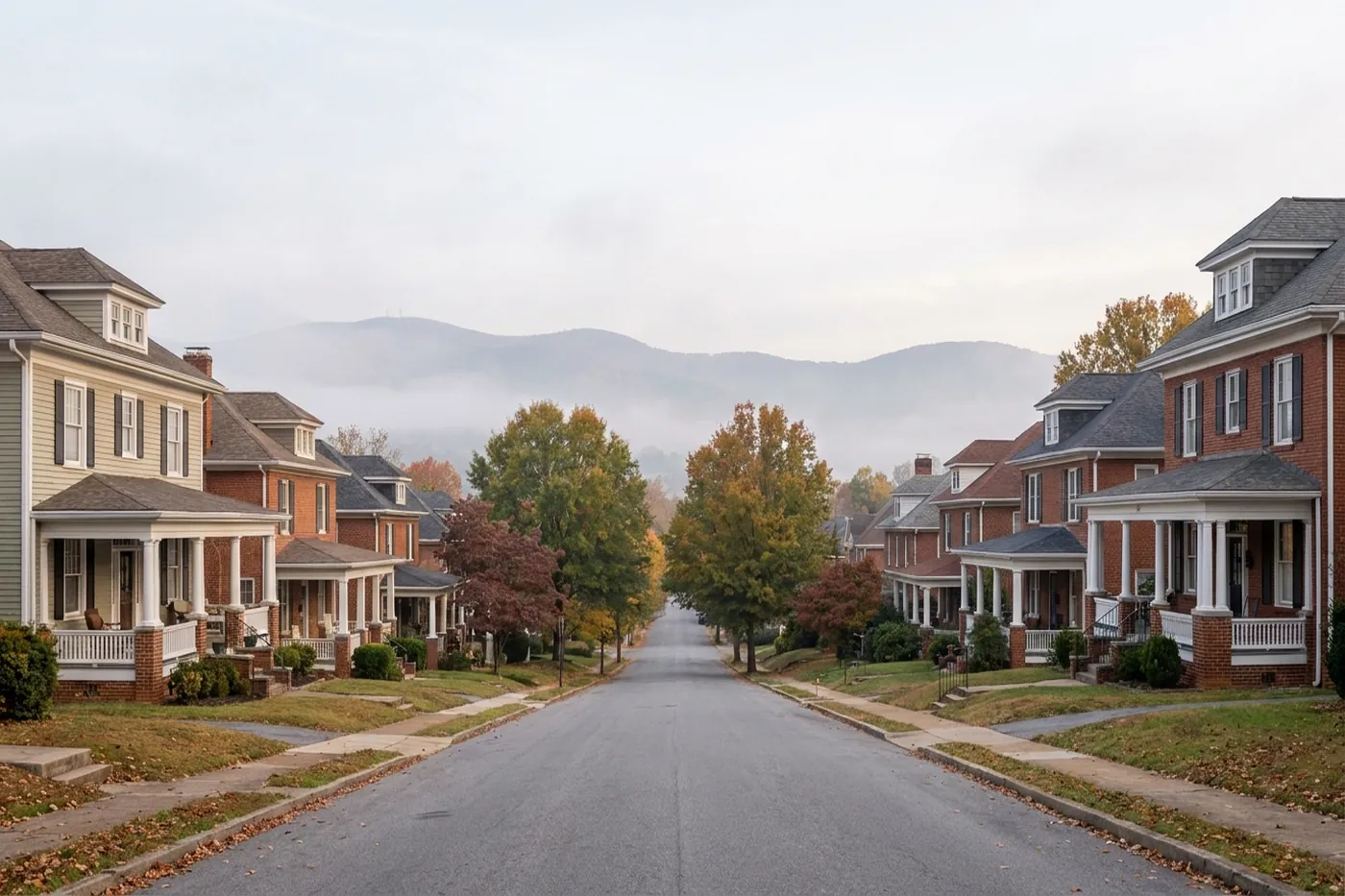
Sagging floor repair in Roanoke runs $1,500–$8,000 for most crawl space structural work: re-supporting settled piers, replacing rot-claimed sill and girder sections, and sistering weakened joists. On valley slopes, runoff and seasonal seeps wet the uphill side first — so the settlement usually has a direction.
Why Roanoke sags point at the mountain, what a century of valley water does to piers, and the repair in order.
Water arrives sideways here
Flat-country crawl spaces get wet from above; Roanoke’s get wet from uphill. The valley between the Blue Ridge and Alleghenies moves its 42 inches of annual precipitation along the slopes — surface runoff first, then the slower groundwater the limestone routes through its joints, surfacing as the seasonal springs and seeps this valley is known for. A crawl space cut into that slope takes the water on its uphill side, so the piers there stand in wetter ground, season after season, and settle sooner than their downhill neighbors. The floor above reports the difference as a tilt with a direction — and the direction is the first diagnostic reading, free from the sidewalk.
A century of valley seasons on pier and block
The railroad-era neighborhoods — Old Southwest, the Grandin and Raleigh Court streets — carry early-1900s homes on pier-and-block crawls that have taken that sideways water for a hundred years. The old-growth framing is usually the good news: dense, straight, still carrying. The supports are the ledger: masonry piers eased into softened ground, mortar aged out, wet-side sills and girder ends gone soft while the dry side stayed sound. Postwar Cave Spring-era suburbs show the same pattern younger — less accumulation, same physics. The crawl-under maps it pier by pier, because the repair is targeted, not wholesale.
Reading the symptoms
| What you notice | What it usually means | The fix |
|---|---|---|
| Floor tips toward one side | Uphill piers settled in wetter ground | Re-support on proper footings; drain the cause |
| Bounce mid-room | Joists weakened by damp seasons | Sister or reinforce the run |
| Soft spots underfoot | Rot at wet-side sills or girder ends | Section replacement — rot doesn’t repair |
| Spring-only dampness below | Seasonal seeps on the limestone’s calendar | Interception and drainage, sized for March |
| Doors drifting seasonally | Ground moisture cycling under supports | Footing correction plus moisture control |
The repair, in the order that holds
Measurement first: the laser survey upstairs maps the tilt and its direction; the crawl-under reads the piers, probes the sills and girder ends, and notes which side the stains are on. Then the structural work: settled piers re-supported or rebuilt on footings sized for wet-side ground, rot-claimed sections replaced, weakened joists sistered, the sound old growth left alone.
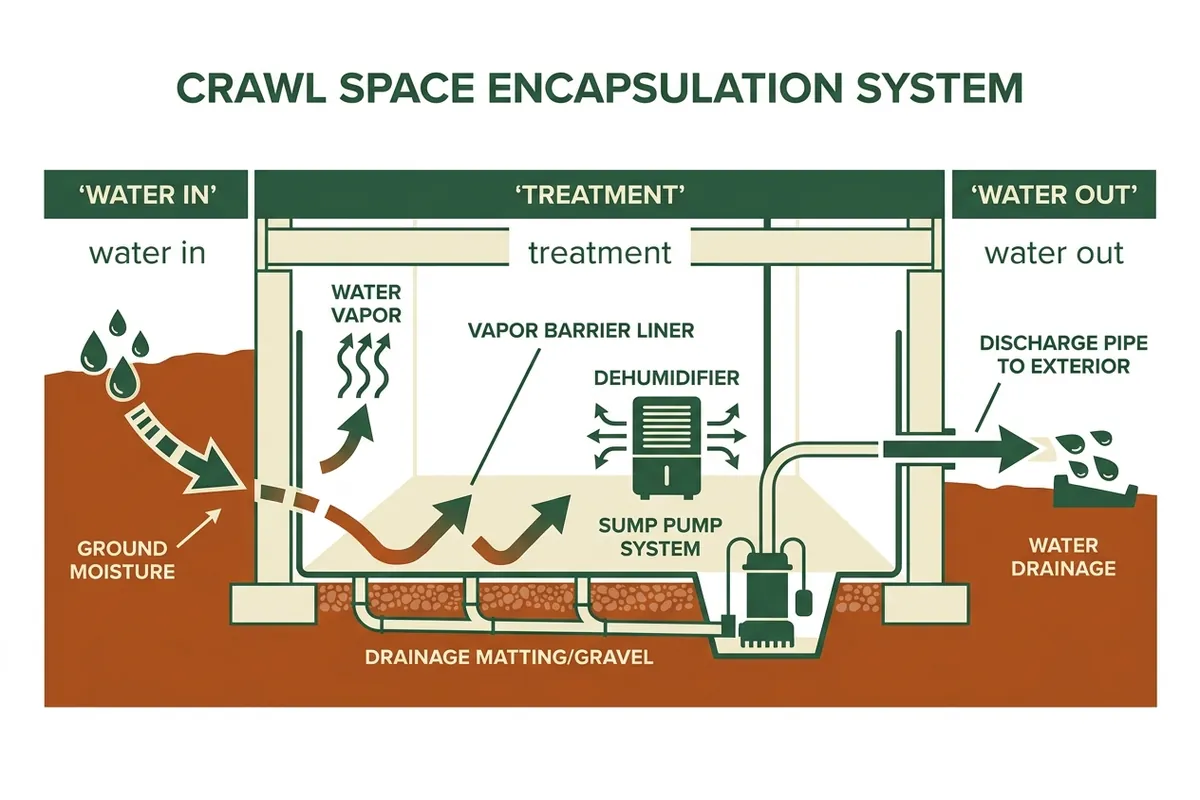
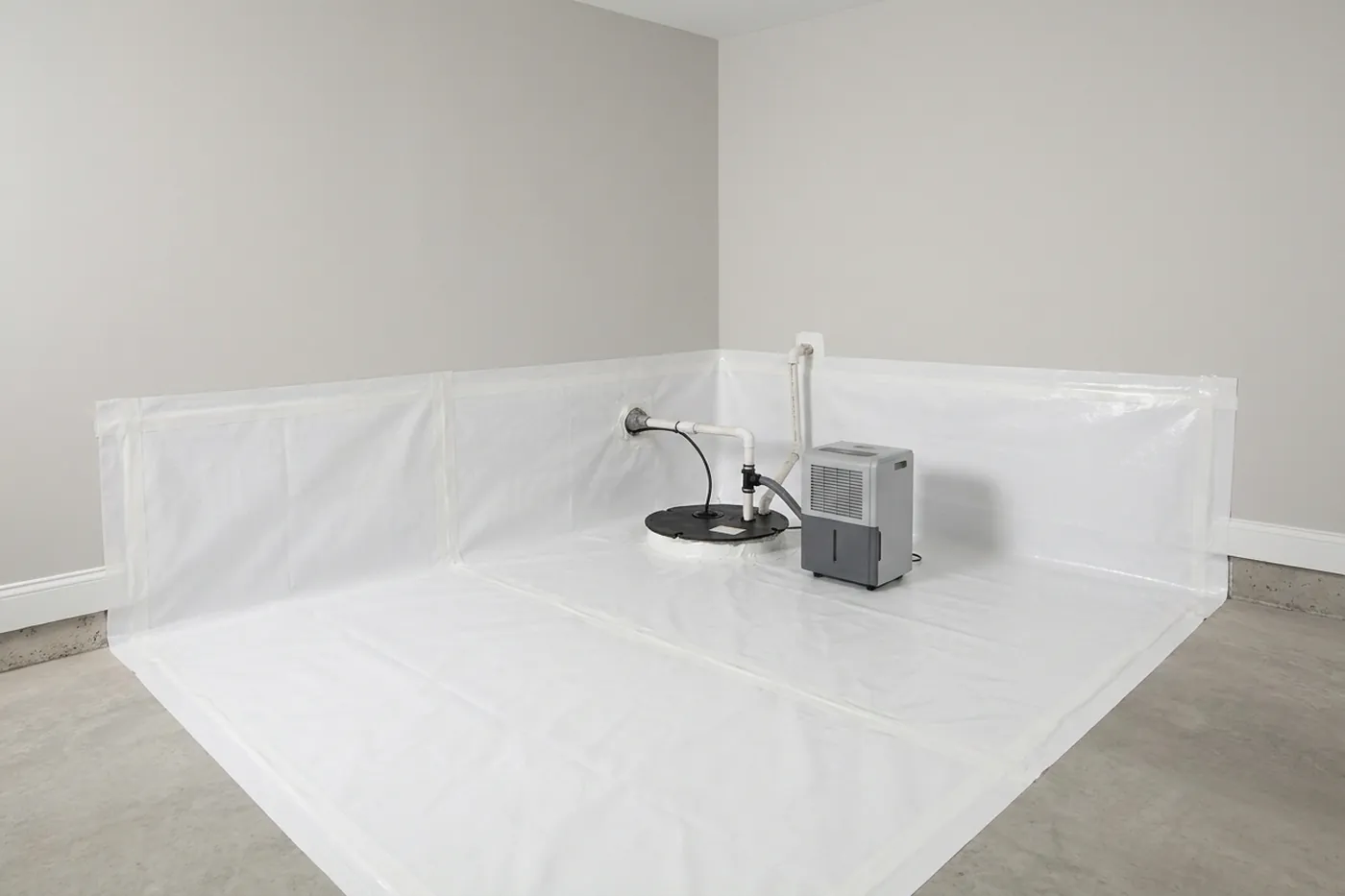
Then the water, addressed where it actually comes from — uphill: waterproofing and drainage that intercept the slope before it reaches the piers, a sealed vapor barrier over the ground, moisture control for the humid season, and full encapsulation — the sealed-crawl approach Virginia’s code explicitly permits — as the endpoint for spaces the seeps visit every spring. Broader context on the crawl space repair page; every price in the cost guide.
Sagging floor questions, straight answers
Why do Roanoke floors sag toward one side of the house?
Because on a slope, water arrives sideways. The valley's runoff, seasonal springs, and seeps reach the uphill side of a crawl space first, so the piers on that side stand in wetter ground and settle sooner. The floor above tips accordingly — many Roanoke sags have a direction, and the direction usually points at the mountain.
Are the old railroad-era neighborhoods worse off?
They're older, which means more accumulated seasons. Old Southwest and the Grandin and Raleigh Court streets carry early-1900s homes on pier-and-block crawls — a century of the valley's 42 inches a year working on masonry piers and wood girders. The framing is often fine old-growth stock; the supports and the wet-side sills are where a century shows.
What are seasonal springs and seeps, and why do they matter?
Mountain-valley groundwater keeps its own calendar. Limestone under the valley moves water along joints that open into hillsides as springs and seeps — dry in August, running in March. A crawl space that passes a summer inspection can host standing water in spring, which is why we read the slope and the stains, not just the day's weather.
What does the repair actually involve?
Match the fix to the failure: re-supporting or rebuilding settled piers on footings sized for wet-side ground, replacing sill and girder sections rot has claimed, sistering joists the damp seasons weakened. Then the water work the slope demands — interception uphill, drainage through, and a sealed crawl below, which Virginia's code explicitly permits.
What does sagging floor repair cost in Roanoke?
Most structural crawl space repairs run $1,500-$8,000 — pier work, sill and girder sections, and access set the number. The uphill drainage and moisture correction that stops the next settlement prices in the same written scope. The crawl-under inspection with photos is free, and on a slope lot it starts outside, reading where the water comes from.
Get a free Roanoke crawl space inspection
Tell us what you're noticing — smells, humidity, floor bounce, a wet crawl — and we'll schedule an inspection with photos of what we find. We reply the same business day.