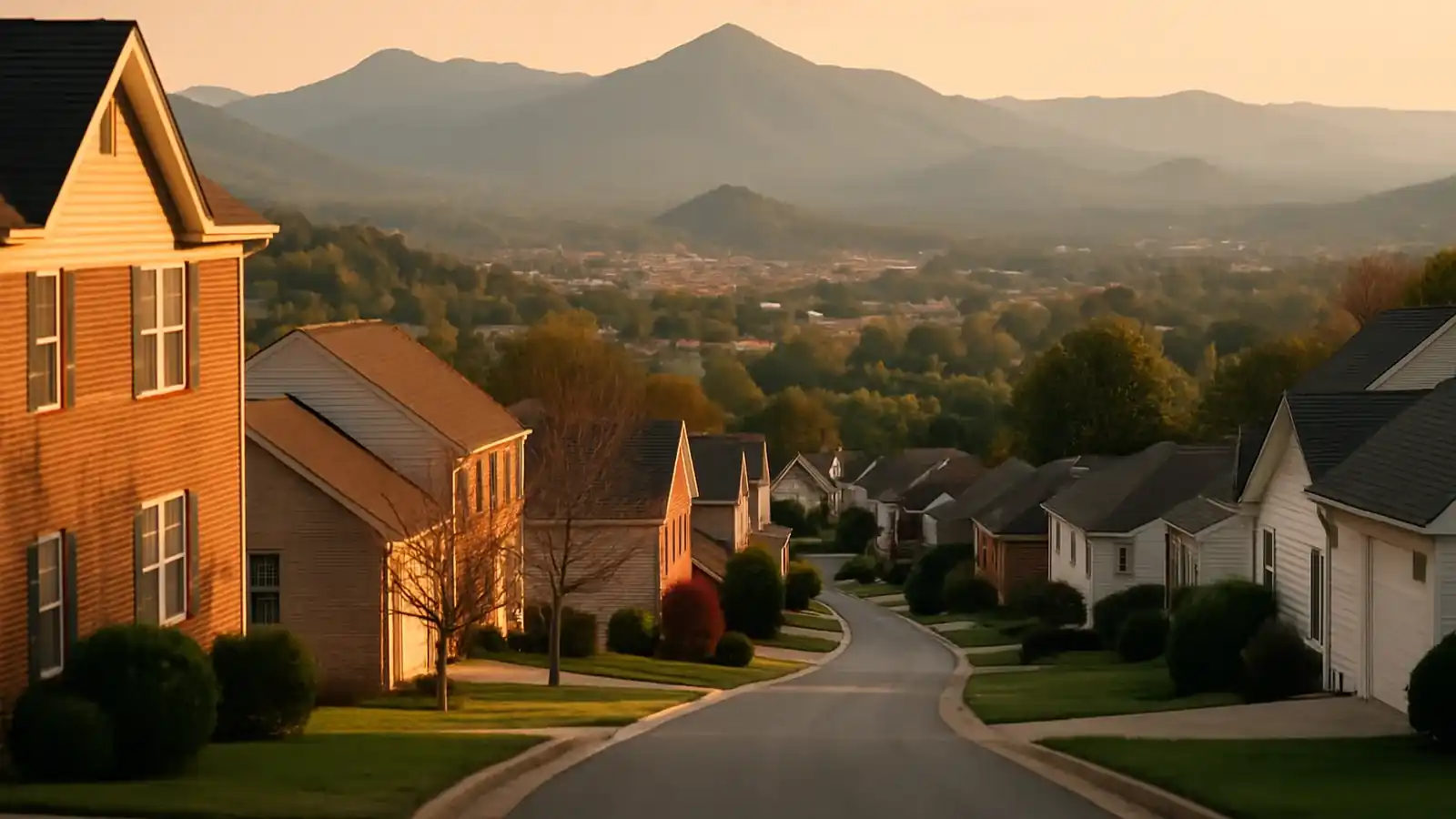
Crawl space mold remediation in Roanoke runs $1,500–$6,000, plus the moisture correction that keeps it gone. In a mountain valley, which way your slope faces changes how much the crawl dries out at all.
Why aspect and season drive growth here, the remediation sequence, and the trap in a late-summer inspection.
Aspect decides more than rainfall does
At roughly 42 inches a year, Roanoke's precipitation looks modest, and that does not mean less mould. The reason is that a valley between the Blue Ridge and the Alleghenies does not get uniform sun. A house on a north-facing slope, shaded by the ridge for most of a winter day, has a crawl that barely dries between November and March. Two hundred metres away on the other aspect, the same construction behaves completely differently.
So the useful reading is not how wet the crawl is today but how long it stays wet. Surface bloom that dries out each summer is a different purchase from growth on framing that has not been properly dry in three years, and only one of those is heading toward a repair conversation.
The sequence
- Document: photos and meter readings of every affected bay, shared first
- Read the history: stain lines, silt fans and rust on ductwork, which record what happened out of season
- Clear: contaminated insulation and debris out
- Treat: antimicrobial application across affected framing
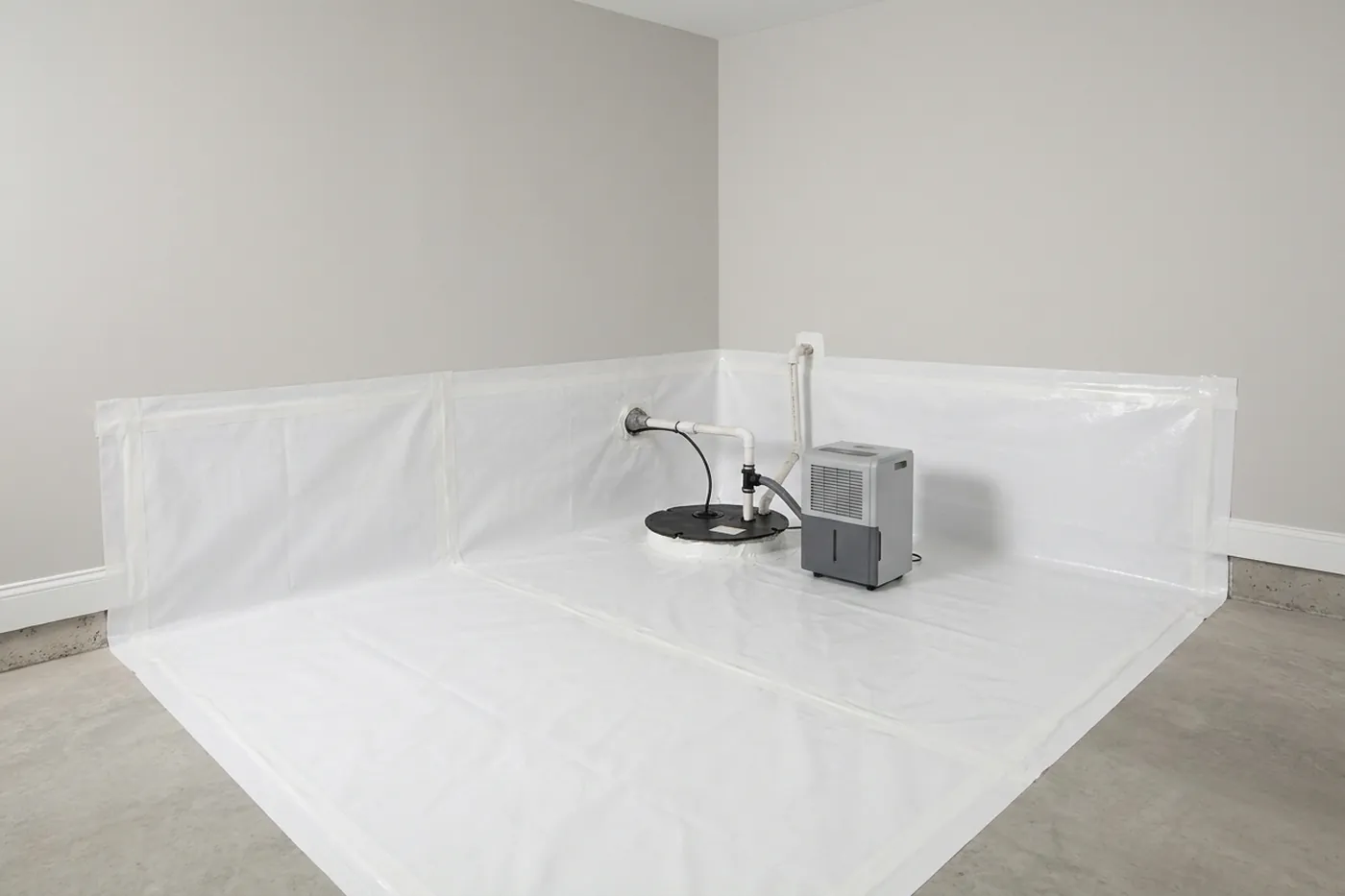
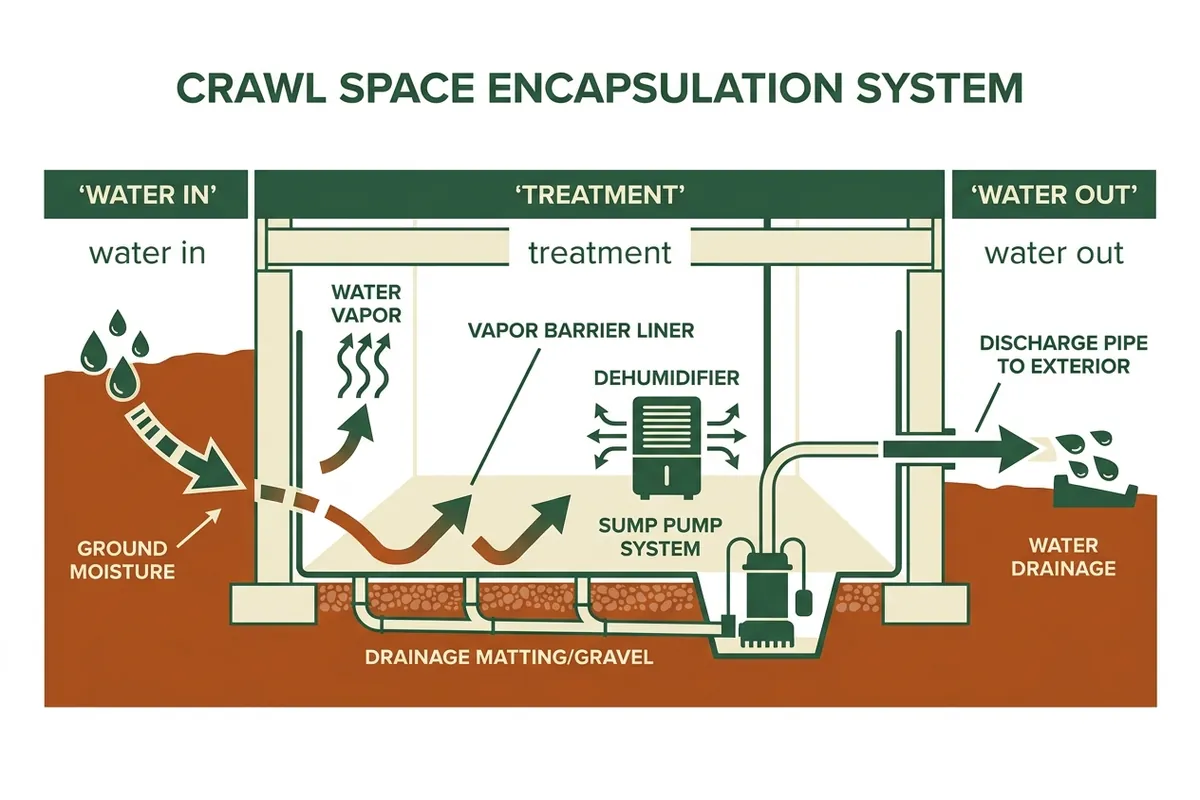
- Correct the moisture: drainage where the slope delivers water, barrier or sealed system where it does not
- Verify: post-work photos and humidity targets in writing
Older houses add a step in practice. Early-1900s stock in Old Southwest and Raleigh Court often has insulation retrofitted between joists decades after the fact, and where it has been holding damp against the subfloor it comes out before anything else happens.
Why an August quote can be the wrong quote
Slope seeps here are seasonal. They run in spring, fade through summer, and a crawl inspected in late August can read genuinely dry while being the same crawl that soaks every March. A treatment scope written from that reading addresses a condition that is not the problem.
This is why a good inspector asks what you have seen and when, and looks for evidence rather than just current numbers. Stain lines on stone piers and silt deposits record the wet season whether or not anyone was watching.
Where the slope is delivering the water, water management is the fix and no thickness of liner substitutes. Where the source is ground vapour, a sealed ground barrier or the full sealed system ends it.
How do you actually get the humidity down?
Mountain modification makes Roanoke a little drier than its neighbours, which misleads people. Forty-two inches concentrated by slope onto one foundation is not a mild load.
| Option | What it does | What works here |
|---|---|---|
| Close the vents | Stops humid outdoor air being invited in | Virginia's code basis permits unvented sealed crawls with a drying mechanism |
| Seal the ground | Cuts off evaporation from bare soil | Ground sealing matters most where seasonal seeps keep soil damp |
| Dehumidify | Removes what is left, and keeps removing it | Holds conditions through summer once the water is intercepted |
| Condition from the house | Supplies a small amount of conditioned air instead | Workable, though slope-fed moisture must be handled first |
Order matters more on a slope than anywhere. Control the water arriving from uphill, then control what is left in the air.
Frequently asked questions
What does crawl mold remediation cost in Roanoke?
$1,500–$6,000 depending on affected area, plus the moisture correction that keeps it gone. Which correction you need depends on whether the water is arriving off the slope or rising out of the ground.
Why is my north-slope house worse for mold?
Because it dries less. A north-facing slope in this valley sits in ridge shade for much of a winter day, so the crawl gets far fewer drying hours than an identical house on the opposite aspect. Same rainfall, very different crawl.
My crawl was dry when it was inspected in August. Can I trust that?
Only alongside the history. Slope seeps run in spring and are gone by late summer, so an August reading can be accurate and still miss the condition. Stain lines and silt on the piers record what the meter cannot.
Should the old insulation between the joists come out?
If it is holding damp against the subfloor, yes, and in retrofitted early-1900s stock it frequently is. The photographs from the inspection show whether yours is drying between seasons or staying wet against the wood.
Get a Roanoke crawl space inspection
Tell us what you're noticing (smells, humidity, floor bounce, a wet crawl) and we'll pass your request to one independent local specialist who serves Roanoke. They call you back to set up an inspection.