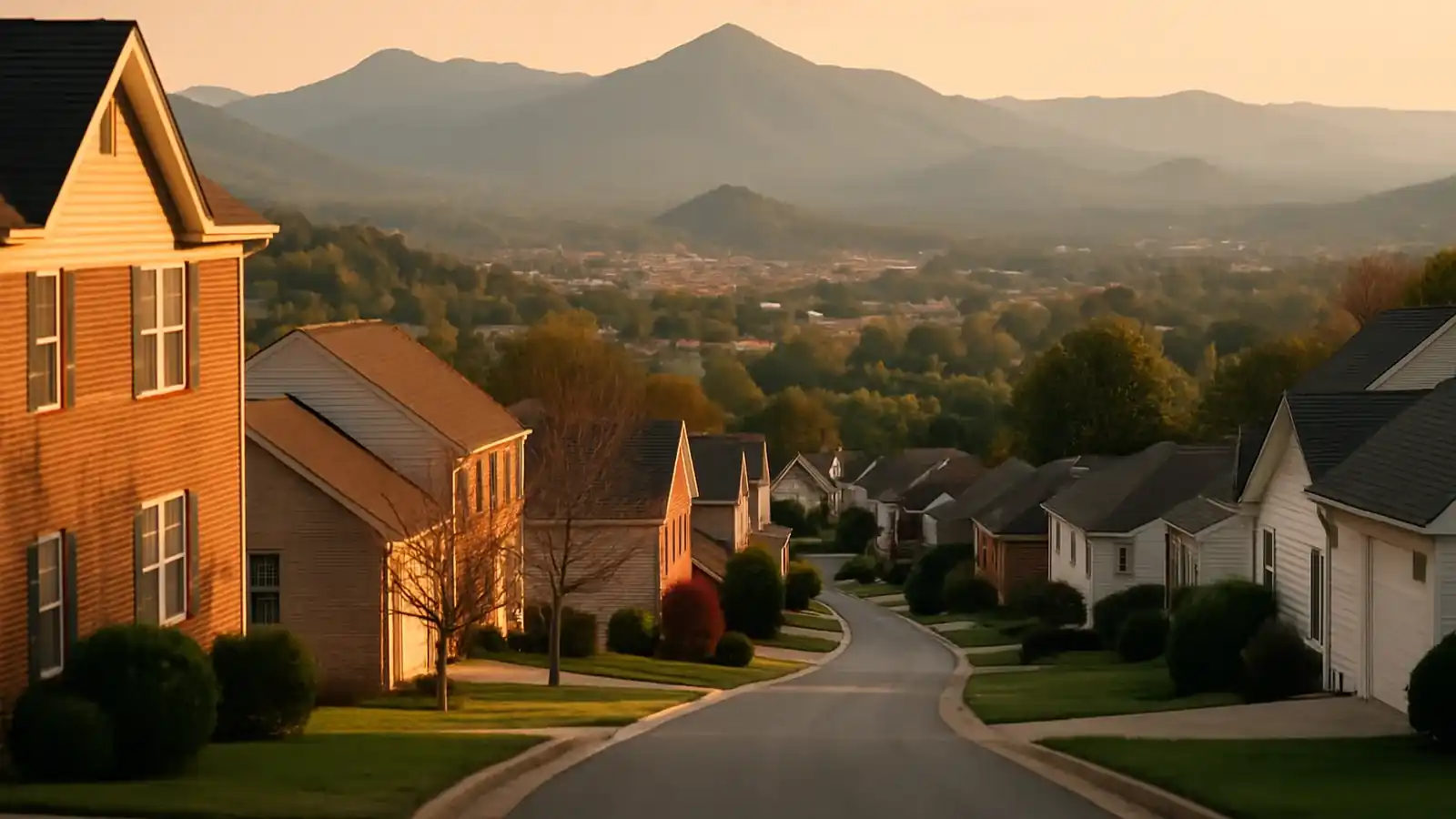
A valley between two mountain ranges delivers water to houses in ways flat markets do not: slope runoff, seasonal springs, and limestone groundwater. The answers below cover telling them apart and what each one needs.
For every price on one page, read the crawl space encapsulation cost in Roanoke guide: what each job class runs, what moves an estimate, and what a written quote should show.
How do I know if I have a problem?
A musty smell that gets into the hallway, floors that feel springy, summer humidity that will not come down indoors, insects that turn up in the same corner every year. The crawl space is usually the answer to more than one of these at a time.
Is encapsulation worth it in Roanoke?
It depends far more on your house than on the town. A north-slope house that barely dries between November and March is a strong case. A well-drained south-facing lot with good clearance often needs a barrier and nothing more.
My crawl was dry when it was inspected. Can I trust that?
Only together with the history. Slope seeps run in spring and are gone by late summer, so an August reading can be accurate and still describe a different crawl than March would. Stain lines on the piers record what the meter cannot.
Why is my north-slope house worse than my neighbour's?
Because it dries less. Ridge shade means far fewer drying hours through the winter, so the same rainfall leaves the crawl damp for much longer. Aspect explains most of the difference between otherwise identical houses here.
Water comes in off the hill behind us. Will a liner stop it?
A liner won't stop water coming in off the hill. A barrier stops ground vapour and does nothing about water arriving from uphill. That needs intercepting above the house, and installing the liner first would only cover the evidence of where it runs.
What does crawl space repair cost in Roanoke, and why do quotes differ?
Price follows what the inspection finds under the house rather than the square footage above it, which is why the range is wide until someone has looked.
What does it cost here?
$6,000–$15,000 for the full system depending on size, drainage needs and any repairs. A vapor barrier alone is $1,500–$4,000. Older pier-and-block crawls sit higher in the range because they take longer to detail properly.
What happens if I go ahead?
What the work involves, how long it takes, and what happens after the crew leaves.
Our house is from 1915, stone piers and a rubble floor. Can it be done?
A 1915 house with stone piers and a rubble floor can be done, and much of the older stock in Old Southwest and Raleigh Court has been. It takes cutting to the actual pier field rather than a standard layout, which is why the crawl should be measured instead of estimated from the square footage.
How long does it take?
A barrier is a day on a postwar crawl. Drainage is one to two. Full encapsulation is two to four, and a century-old pier field runs longer. The quote should reflect your crawl rather than the average.
Is a sealed crawl allowed by code in Virginia?
A sealed crawl is allowed by code in Virginia. The Virginia Residential Code permits unvented, sealed crawl spaces with a Class I vapor barrier and a drying mechanism on the IRC basis, which is what encapsulation installs.
Didn't find your question?
Ask directly or book the inspection and ask everything while the specialist is under the house.
Get a Roanoke crawl space inspection
Tell us what you're noticing (smells, humidity, floor bounce, a wet crawl) and we'll pass your request to one independent local specialist who serves Roanoke. They call you back to set up an inspection.