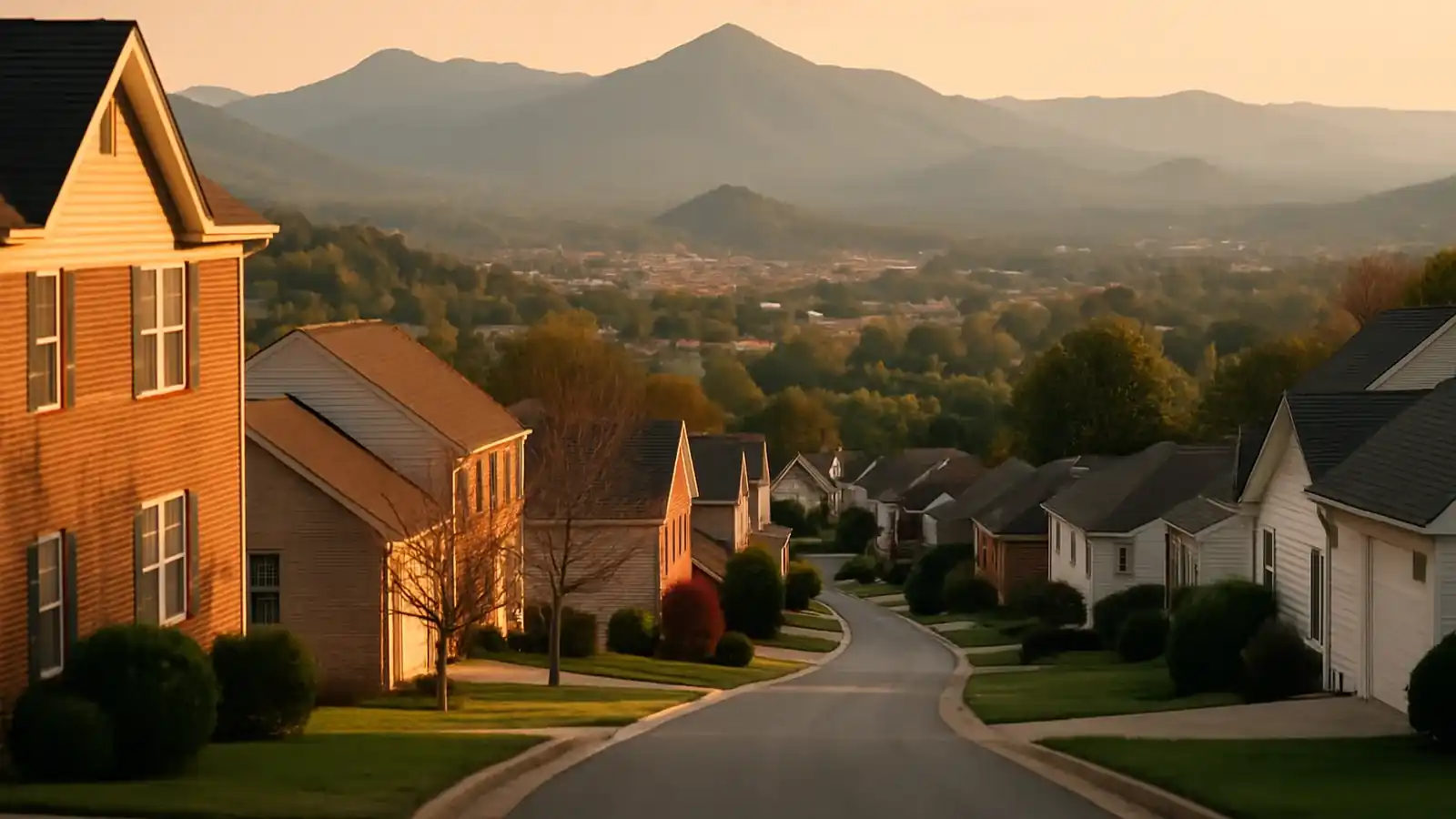
Vapor barrier installation in Roanoke costs $1,500–$4,000 for a reinforced 12–20 mil liner sealed at seams and piers. In a valley between two mountain ranges, a crawl gets water from uphill as well as from underneath.
Why slope and season decide what a Roanoke crawl needs, what a sealed install includes, and why a summer inspection can miss the problem.
Water arrives sideways here
Roanoke sits in a valley between the Blue Ridge and the Alleghenies, and most crawl space moisture in this market has travelled before it reaches you. Rain lands uphill, moves through the soil down the slope, and surfaces where the ground makes it, which is often under the lowest corner of a house that was built across the contour. Add limestone-valley groundwater and you get seasonal springs and seeps that appear in places with no drainage fault above them at all.
Roughly 42 inches of precipitation a year makes this valley look dry on paper, and that number is misleading. It is not the volume that decides what your crawl does; it is where the slope sends it.
Detailing an old crawl properly
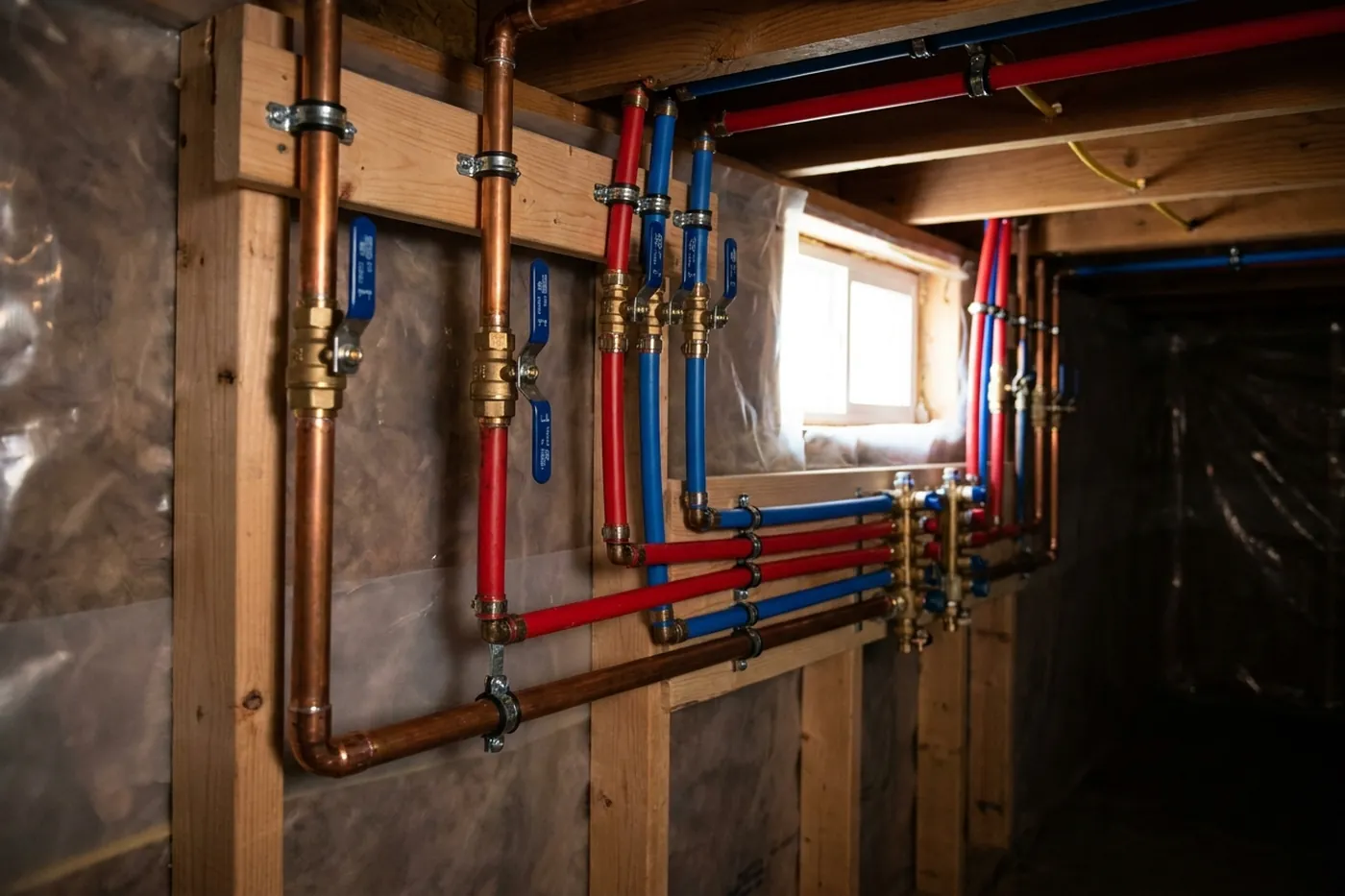
The railroad-era neighbourhoods (Old Southwest, Grandin, Raleigh Court) are largely early-1900s houses on pier and block crawls, and those are not flat floors with tidy columns. Rubble, stone piers of no fixed dimension, clearance that changes as you cross. A liner cut for a modern crawl does not fit one, and a liner that does not fit is a liner that lifts.
- Reinforced 12–20 mil liner: survives decades of service traffic
- Cut to the actual pier field: stone and block wrapped individually
- Ground prepped: rubble and sharp rock cleared before a panel lays
- Seams overlapped and taped full length: a seal, not a loose lay
- Fastened at walls and every pier so nothing migrates
Installation day
- Ground prep: rubble, failed sheeting and sharp rock cleared, surface raked
- Measure the real thing: pier positions and clearance mapped, not assumed
- Layout: panels cut oversized so every seam overlaps generously
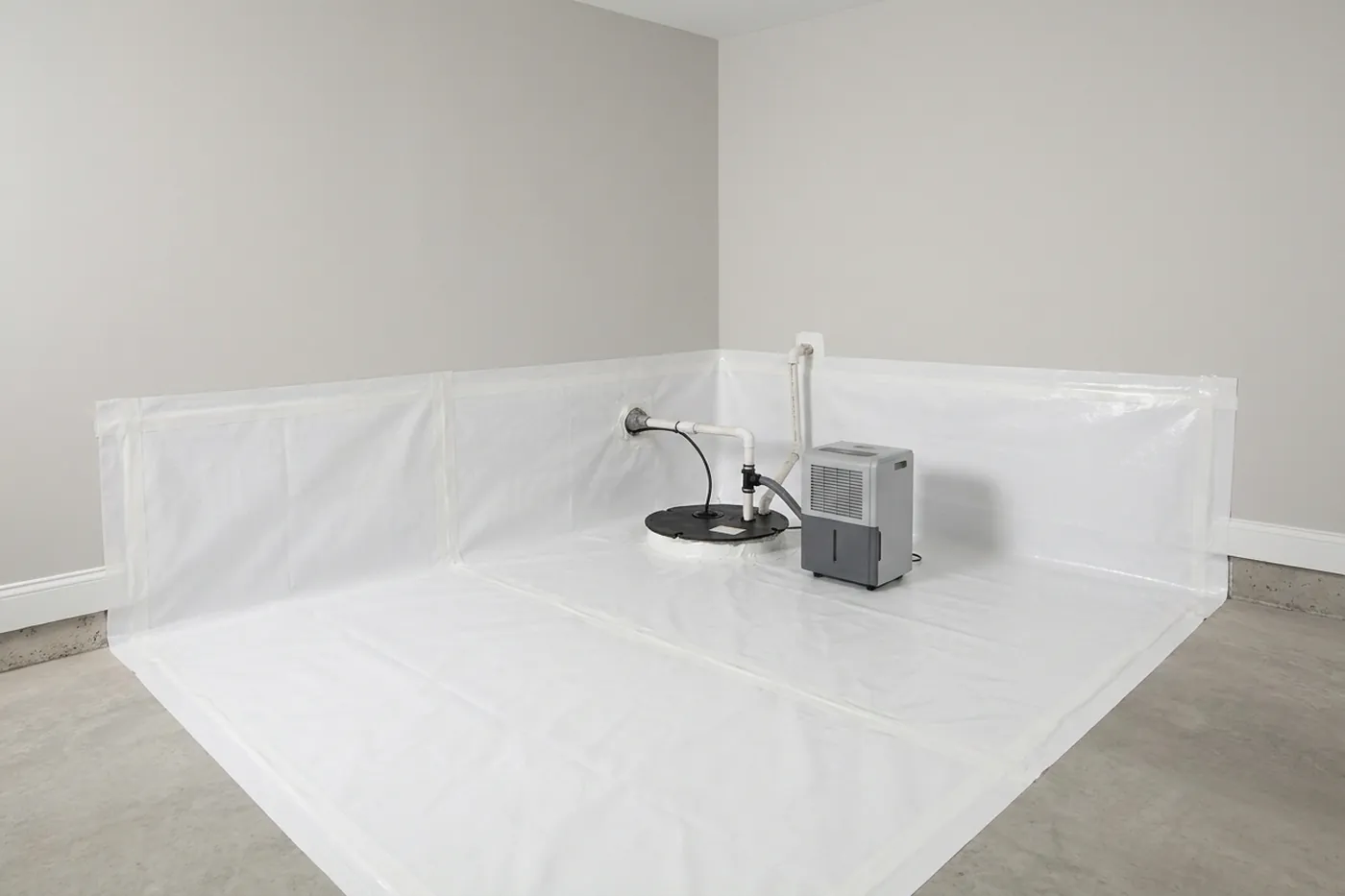
- Sealing: seams taped, piers wrapped individually, penetrations closed
- Photos: the finished layer documented before the crew leaves
A postwar crawl out toward Cave Spring is usually a one-day job. A century-old pier field in town can take longer, and the quote should reflect the crawl rather than the average. Rural properties on a slope get their approach decided at the inspection, because the fall matters more than the floor plan.
What changes upstairs
Sealing the ground removes the evaporation feeding your floor system, which shows up as drier subfloor readings and a less stubborn summer indoors. In older houses it also makes the crawl usable. A surface someone can cross to reach a valve or a joist without disturbing what is underneath.
What it does not do is stop humid air condensing once it is through the vents, which is the sealed system's job, and it does not redirect water running in off the slope. That one needs drainage, and no thickness of liner substitutes.
Why we ask when you last looked
Newer construction around Daleville and Troutville often needs this layer and nothing more, and the readings will say so plainly.
The catch in this market is seasonal. Slope seeps run in spring and are gone by August, so a crawl inspected in late summer can read dry and still be the crawl that soaks every March. A good inspector asks what you have seen and when, and reads the crawl for evidence of what happened while nobody was down there: stain lines on piers, silt fans, rust patterns on ductwork. A barrier bought on a dry-August reading is the most common wasted purchase here.
Which barrier does this crawl space need?
A barrier on sloping ground has a harder job than the same barrier on a flat lot, because the water underneath it is moving rather than sitting.
| Option | What it does | What this market demands of it |
|---|---|---|
| Light poly, ground only | Basic evaporation control, loosely laid | Light poly does not survive contact with a seasonal seep |
| Class I barrier, sealed | Seams and edges sealed to the walls and piers | The code-recognised minimum, and on a slope the seams do the real work |
| Full encapsulation | Barrier up the walls, sealed, with humidity control | The right answer once slope water has somewhere else to go |
| Barrier over wet ground | A liner laid on ground that still takes water | Over a spring line this traps water and hides it: the worst outcome |
In railroad-era homes on block piers, sealing to an uneven wall is the craft part. A barrier is only as good as its worst seam.
Frequently asked questions
What does a vapor barrier cost installed in Roanoke?
$1,500–$4,000 for a reinforced 12–20 mil liner sealed at seams and piers across most crawls in the valley. It is also stage one of full encapsulation, so nothing is wasted if the crawl is upgraded later.
My crawl is dry now. Do I still need one?
Possibly, and the season is the reason to check rather than assume. Slope seeps here run in spring and disappear by late summer, so an August inspection reads a different crawl than March does. Stain lines on the piers record which one you have.
Will a liner stop water coming in from the hill behind us?
A liner won't stop water coming in from the hill behind the house. A barrier stops ground vapour; it does not redirect water arriving from uphill. That needs drainage, and installing the liner first would just cover the evidence of where the water goes.
My house is from 1915 and the crawl is stone piers and rubble. Can it be lined?
A 1915 stone-pier and rubble crawl can be lined, and most of the older stock in Old Southwest and Raleigh Court has been. It takes cutting to the actual pier field rather than to a standard layout, which is why the crawl should be measured instead of estimated from the square footage.
Get a Roanoke crawl space inspection
Tell us what you're noticing (smells, humidity, floor bounce, a wet crawl) and we'll pass your request to one independent local specialist who serves Roanoke. They call you back to set up an inspection.